What you can see on the Xeraco webcam
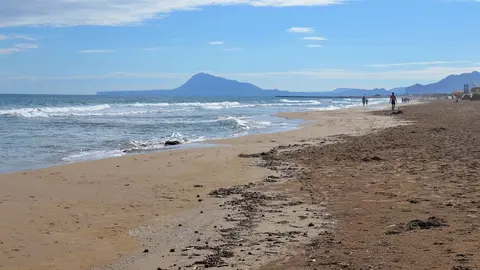
The camera looks down from a rooftop behind the beach and points north along the shore. In the foreground is the dune ridge with its low scrub and wooden walkways; then comes a wide band of pale sand with volleyball nets, and finally the surf. Because so much of the coast is in view, it is one of the best cameras in the area for reading the sea: the number of lines of breaking waves tells you at once whether it is a swimming day.
Xeraco beach webcam
From a rooftop just behind the beach, this camera looks north along Platja de Xeraco. In the foreground is the dune ridge that protects the shore here, covered in low scrub and crossed by wooden walkways; beyond it lies a broad band of pale sand with volleyball nets, and then the surf, which on windy days arrives in several lines of white water.
It is one of the best cameras on this coast for reading the sea, because it takes in a long, empty stretch of shore at once. The beach is much quieter than neighbouring Gandia, and the picture shows it: outside the summer holidays there may be only a few walkers and a beach-cleaning tractor in view.
A beach kept wild on purpose
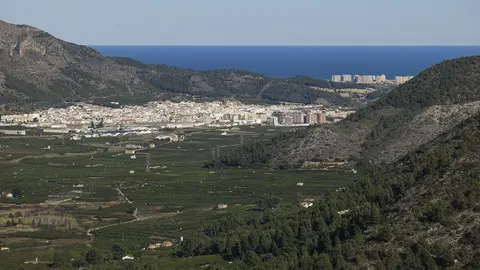
Xeraco Platja is separated from the resorts of Gandia and Tavernes by the mouth of the Riu Vaca and by marshland where native birds still breed. The dune ridge, known locally as the mota, is fenced off to let the plants recover, and the boardwalks that cross it are the only way down to the sand. Behind the village rises Mondúver, one of the highest peaks in the area.
When to watch Xeraco
Facing east, the beach takes the first sun of the day; the camera looks along the shore, so the morning light is never straight in the lens. Mainland Spain is one hour ahead of the UK. Easterly winds bring the biggest waves, and they are most frequent in autumn and winter, when the camera often shows white water from the shore to the horizon. In summer, early morning is the calmest time.
Around Xeraco
Gandia, with its Ducal Palace of the Borgias, is about 5 miles (8 km) south. Tavernes de la Valldigna and the Valldigna valley are just north, and the walk up Mondúver gives views over the whole coast.
Visiting Xeraco
Xeraco has a station on the C1 commuter line from Valencia, about 35 miles (57 km) to the north, and an exit on the AP-7 motorway. The beach is about 2 miles (3 km) from the village. There are few high-rise buildings, so the resort stays low-key even in August.