What you can see on the Ezcaray webcams
From the crag of San Torcuato, one camera takes in the whole village spread along the floor of the valley, with wooded slopes and the mountains of the Demanda behind. The other looks down on the Plaza del Conde de Torremúzquiz, the main square, with its bandstand and half-timbered houses.
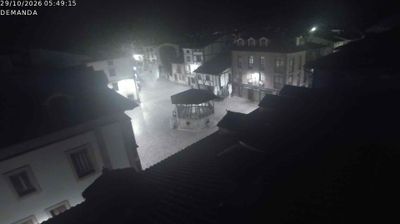
Ezcaray's main square and its bandstand
From a rooftop on the main square of Ezcaray, the Plaza del Conde de Torremúzquiz, this camera looks across the tiled roofs to the paved square and the wooden bandstand in its middle. Around it stand the buildings that give the village its character: half-timbered houses with white walls between dark beams, glazed balconies, a tall brick mansion and, behind the roofs, the wooded mountainside rising steeply above the valley. The camera belongs to a local holiday-apartment business and is published on Windy, where it plays as a time-lapse of the last 24 hours. Use it to see whether the café terraces are busy or the square is quiet, whether it is raining, and on winter mornings whether snow lies on the roofs.
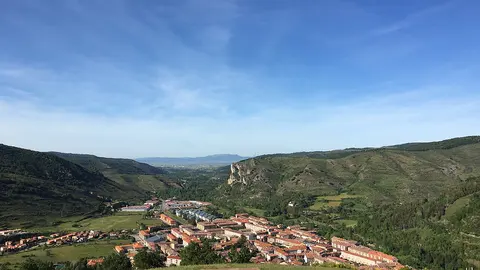
Ezcaray from the crag of San Torcuato
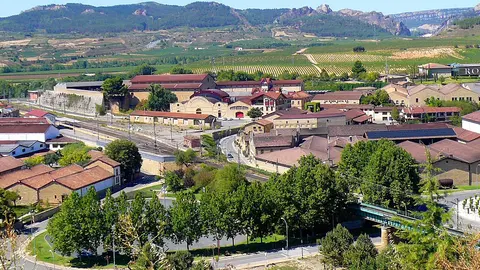
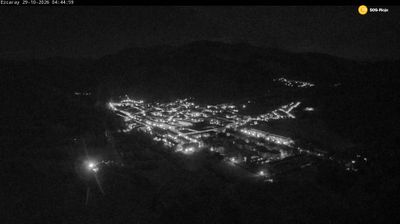
This camera of the Government of La Rioja stands among scrub and oaks on the hillside of San Torcuato, the crag above Ezcaray that may have given the town its Basque name, meaning high rock. It looks south-west up the valley of the river Oja. The village fills the valley floor: the old centre of red roofs, a row of taller blocks, and the municipal swimming pools and sports ground in front. Wooded slopes close in on both sides, and the mountains of the Sierra de la Demanda rise behind, where a road climbs to the ski slopes of Valdezcaray. In winter it shows whether snow has reached the village or stayed on the peaks; in autumn the woods change colour. It is a still image with the date and time; the refresh button brings the latest.
A village of weavers
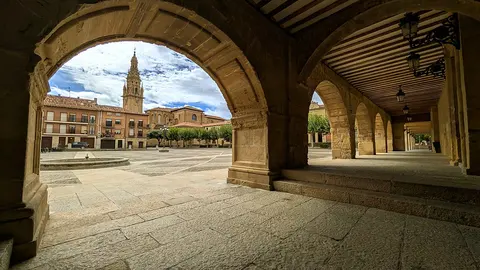
Ezcaray owes its handsome centre to cloth. In 1752 a royal textile factory, the Real Fábrica de Santa Bárbara, was founded here and named after Barbara of Braganza, wife of Ferdinand VI, and the village grew fast as weavers arrived from the Basque Country and Navarre. Its dye house, rebuilt in fireproof materials after a blaze in 1785, still stands and is now a hostel, and the weaving tradition lives on in the woollen blankets still made in the village. Arcaded streets, timbered houses and stone mansions make it a fine place for a stroll.
When to watch Ezcaray
Ezcaray is one hour ahead of the UK and Ireland. At about 810 m (2,660 ft), it is noticeably cooler than the Ebro valley. In winter the cameras show whether snow has reached the village or stayed on the peaks, which helps when deciding whether to drive up to the ski area; in autumn the woods of the valley turn copper and gold, and on summer evenings the main square is at its liveliest.
Around Ezcaray
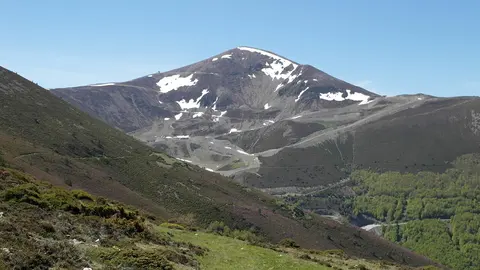
Valdezcaray, La Rioja's ski resort, is 8 miles (13 km) up the valley on the slopes of San Lorenzo, the highest mountain in the region. Santo Domingo de la Calzada, on the Way of St James, is 9 miles (14 km) down the road, and the monasteries of San Millán de la Cogolla, a World Heritage Site, are about 20 miles (32 km) away.
Getting to Ezcaray
Bilbao airport, with regular flights from the UK and Ireland, is about 80 miles (129 km) away by road, by way of Santo Domingo de la Calzada.