
What you can see on the Vilanova i la Geltrú webcam
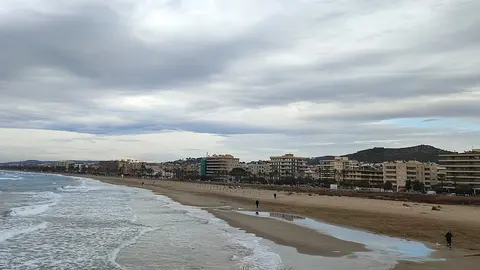
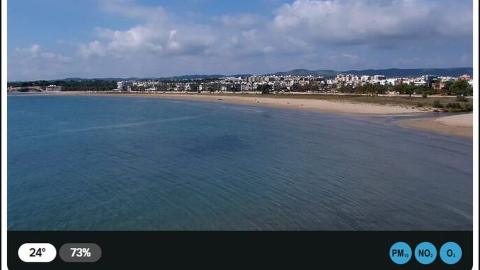
The camera stands right at the edge of the sea and looks back towards land. Waves break in the foreground, a long beach curves across the middle of the picture, and behind it the low white buildings of the town give way to the hills inland. It is a still photo from the weather camera network of 3Cat, Catalonia's public broadcaster, shown with the latest temperature, wind and humidity, and a 24-hour time-lapse of the same view lets you see how the surf and the light changed through the day.
From the water's edge, looking back across the surf
This weather camera of 3Cat sits right by the water and looks north-west, back across the surf to the shore. The bottom half of the picture is open sea, with waves rolling in and breaking in white lines; above it, a broad sandy beach sweeps from left to right, with a strip of green behind the sand, the white apartment blocks of the town and, on the skyline, the wooded hills inland.
It is the camera to check the swell: count the lines of breaking waves and see how far up the sand they run. In the early morning the low sun lights the town and the beach in warm gold. The photo comes with the latest temperature and wind, and the 24-hour time-lapse of the same view is listed just below.
A fishing town with a party streak
Vilanova still lives partly from the sea: its fishing fleet lands its catch in the harbour, where it is sold at auction. The town is also known across Catalonia for its festivals. Its Carnival, in February or March, is famous for the Comparses, when dancers in costume pelt each other with sweets in the main square, and its international festival of traditional and world music has been held since 1981.
When to watch Vilanova i la Geltrú
Spain is one hour ahead of the UK and Ireland. The beaches face south, so they get sun all day; mornings are usually the calmest, and summer afternoons bring a sea breeze. Easterly storms push bigger waves onto this stretch, and the camera shows them breaking well up the beach. Four beaches, D'Adarró, Ibersol, Ribes Roges and Sant Gervasi, hold a Blue Flag for 2026.
Around Vilanova i la Geltrú
The Railway Museum of Catalonia, beside the station, keeps one of the largest collections of steam locomotives in Spain, and the Víctor Balaguer Library Museum, close by, mixes Egyptian antiquities with Catalan painting. Sitges is about 6 miles (10 km) up the coast, and the quieter beaches of Cubelles lie to the south-west.
Visiting Vilanova i la Geltrú
The town is about 28 miles (45 km) from Barcelona, and trains from the city take under an hour. The seafront promenade links the beaches with the port, so it is easy to walk from one to the next.