What you can see on the Fuentes de Invierno webcams
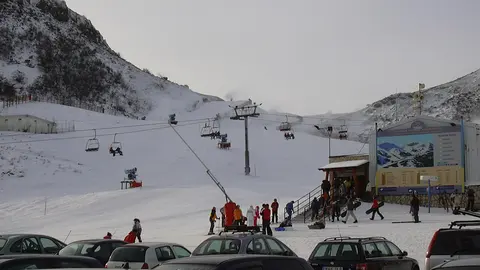
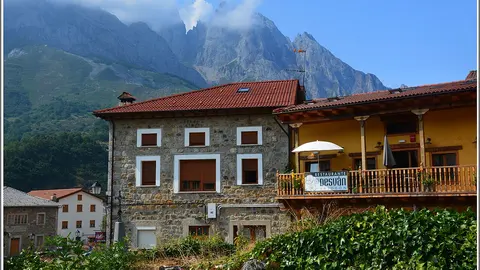
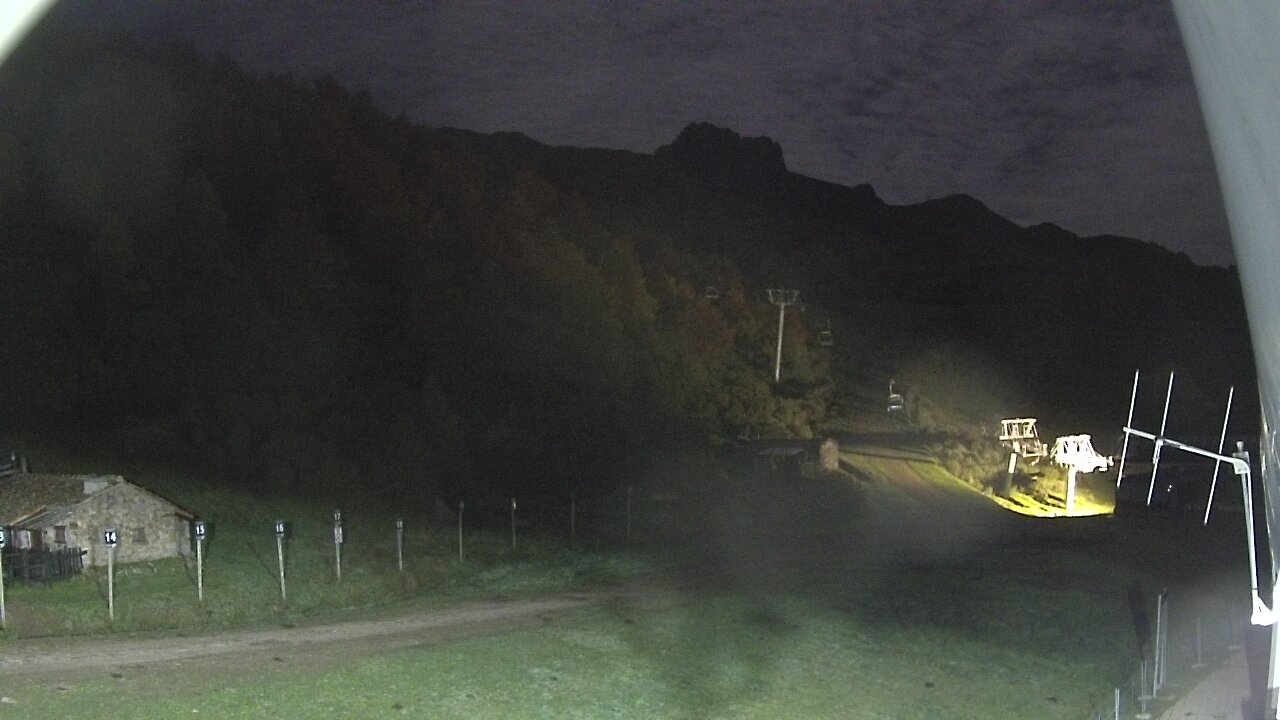
One camera looks up the main slopes: a wide grassy run edged by a wooden snow fence, lift pylons climbing to a rocky summit with a mast on top, and the small buildings of the upper lifts. The other faces the base area, with an old stone hut, a dirt track, the bottom station of a chairlift and its line rising through deciduous woods towards a long limestone crest. Out of season cows graze among the piste markers. They are still images, not video: the refresh button brings the latest one.
Fuentes de Invierno webcam up the main slopes
This camera looks up the main slopes of Fuentes de Invierno from the lower part of the resort. A broad green run sweeps up the middle of the picture, edged on the right by a long wooden snow fence with numbered posts; lift pylons climb the hillside towards a rocky summit crowned by a mast, and the small buildings of the upper lifts sit on the skyline.
This is the view that shows the snow cover best: in a good week the whole slope is white to the summit. Morning sun lights the top first while the bottom stays in shade. It is a still image, not video: the refresh button brings the latest one.
The base area and its chairlift
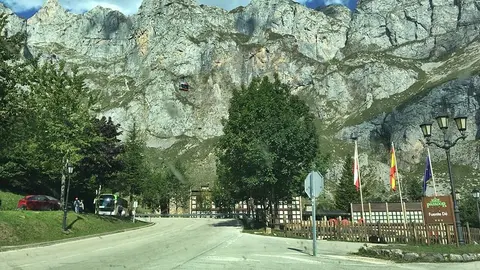
The second camera faces the base of the resort. On the left is an old stone hut with a slate roof; a dirt track crosses the picture, and to the right the bottom station of a chairlift sends its line up through the woods towards a long, pale limestone crest. Numbered piste markers stand along the edge of the run, and outside the season a herd of cows often grazes right in front of the lens.
It shows conditions at the bottom of the runs, the most uncertain part of a low resort, and the autumn colours of the woods are worth a look in October. It is a still image, not video: the refresh button brings the latest one. Windy shows the same view as a time-lapse of the day.
A resort born from the mines
Fuentes de Invierno opened in March 2007, one of the projects meant to help the Aller valley after the decline of its coal mines. It is small, with about 9 km (6 miles) of marked runs served by three chairlifts, a drag lift and a conveyor belt. The base sits at about 1,500 m (4,920 ft), a middle area at Llana'l Fitu at about 1,700 m, and the top lifts reach about 1,950 m (6,400 ft), close to the summit of La Llomba. The slopes face north, which helps the snow last. Its neighbour, San Isidro, lies just over the pass in León.
When to watch Fuentes de Invierno
Spain is one hour ahead of the UK and Ireland. The season usually falls between December and April, with the best cover in mid-winter. The images are brightest from late morning, when the sun clears the ridge. Atlantic weather arrives fast here: a clear picture at breakfast can be fog by lunchtime, and the cameras are the simplest way to check before the drive.
Around Fuentes de Invierno
The upper Aller valley has mining villages such as Felechosa and Collanzo, hórreos (raised granaries) and beech forests that turn gold in autumn. The Redes Natural Park, a UNESCO biosphere reserve, is just to the east, and Oviedo is a little over an hour away.
Getting to Fuentes de Invierno
A mountain road climbs the Aller valley through Felechosa to the resort, just below the San Isidro pass. The nearest airport is Asturias, about 73 miles (117 km) by road; Santander and Bilbao have more flights from the UK. Snow chains are often needed on the last stretch.