
What you can see on the Matalascañas webcams
Both cameras stream live. One looks along the sand to the great block of stone at the water's edge that everyone here calls El Tapón, with a line of rocks running from it along the shore. The other looks over whitewashed rooftops and a row of palms to the beach and the open sea. They are good for checking the tide, since a wide, firm beach opens up at low water, and for seeing how much room is left on the sand.
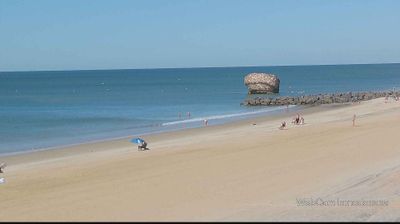
El Tapón live from the beach at Matalascañas
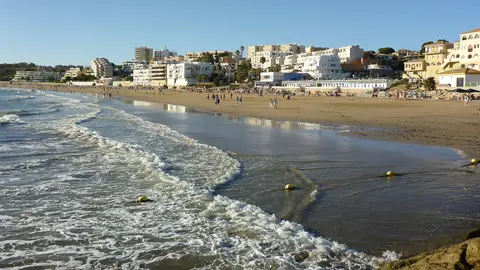
This is the original live stream of the El Tapón camera, run by Inmodoñana, an estate agency in Matalascañas. It looks west along the beach from a low height, so the sand fills the lower half of the picture and you can follow people strolling along the water's edge. Further off, the huge block of El Tapón sits in the shallows at the end of a breakwater of dark boulders, with a line of buoys marking the bathing area. Because it is smooth video, it is easy to judge the size of the waves and how hard the wind is tugging at the parasols. On fine days in October there are still sunbathers on the sand; in winter the beach belongs to walkers and anglers.
Caño Guerrero beach live over the white rooftops
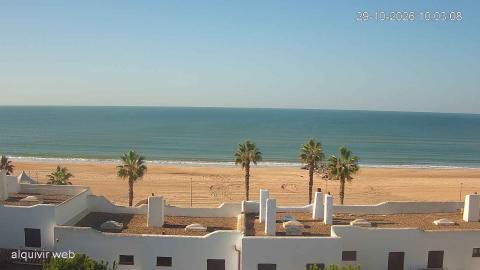
Alquivir, an estate agency based in Matalascañas, streams this camera from a rooftop near Caño Guerrero beach, at the south-eastern end of the resort, close to the edge of Doñana. The flat roofs of a low white apartment block, with their chimneys and skylights, run along the foot of the picture; behind them a row of palms rises from the seafront, and the broad golden beach stretches to a gentle line of surf and the Atlantic horizon. It faces south-west, so in the afternoon the sun lays a silver path across the water and the evening light is warm. Use it to see the colour of the sea, whether any swell is running and how many people are on the sand.
The upside-down tower
El Tapón is the Torre de la Higuera, a watchtower built in the 16th century under Philip II to warn of raids by Barbary corsairs. The sea ate away the ground it stood on and toppled it, and its foundations now lie upside down on the beach. It has been protected as a monument since 1985, and locals also know it as La Peña.
When to watch Matalascañas
Mainland Spain is one hour ahead of the UK and Ireland all year. The beach faces south-west across the Gulf of Cádiz, so afternoons bring the warmest light and the sun sets over the sea. In summer the resort fills with families from Seville; the rest of the year the beach is quiet, and the cameras show long, empty sand.
Around Matalascañas
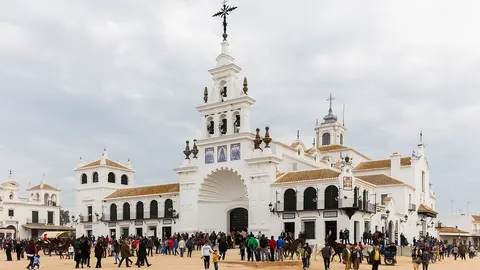
Doñana National Park begins at the edge of town. Its dunes, pine woods and marshes are home to the Iberian lynx and to vast numbers of birds in winter, and a boardwalk trail through the dunes starts close to the resort. Inland, the village of El Rocío, with its sandy streets and great white shrine, is the goal of one of Spain's largest pilgrimages at Whitsun.
Visiting Matalascañas
Seville airport is the nearest, about an hour away by road. Much of Doñana can only be entered with authorised guides or from its visitor centres, so plan a visit in advance and stay on marked paths in the dunes. Out of season some shops and restaurants close, but the beach is never short of space.