

What you can see on the Cala Ratjada webcams
Within a short walk of each other you can switch from Son Moll, the town beach under the hotels, to the harbour and its breakwater, the rocky seafront promenade and the tiny cove of Cala Gat below the lighthouse road, and several of these views also come with a 24-hour time-lapse. They show the sunbeds filling up, the boats coming and going, the clear water over the rocks and, on windy days, the waves breaking white. The two big natural beaches north of the town have pages of their own: Cala Agulla, watched from the shore and from its headland, on the Cala Agulla webcams page, and Cala Mesquida, the open, dune-backed beach that catches the northerly swell, on the Cala Mesquida webcam page.
Son Moll beach webcam, Cala Ratjada
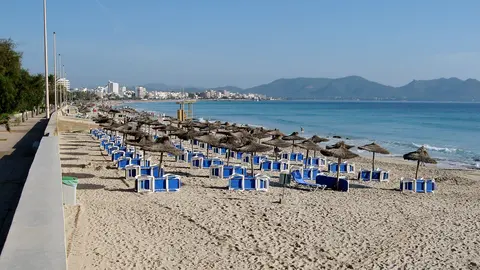
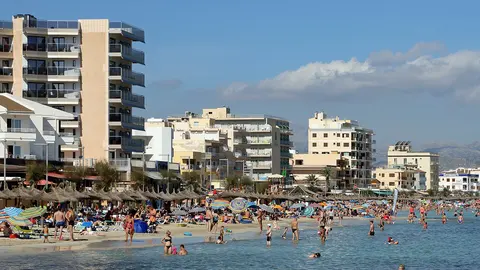
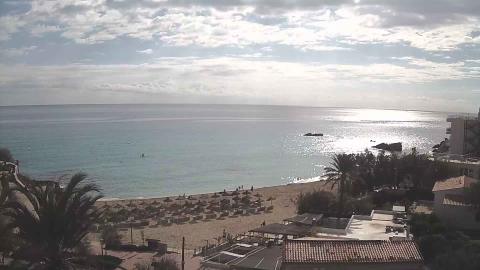
From above the town, this camera looks across Son Moll, the beach in the heart of Cala Ratjada, and out to the open sea. Terraces and rooftops fill the foreground, rows of straw parasols cover the sand, palms line the promenade and a hotel rises on the right.
It is the camera to check before heading down: how full the beach is, whether the sea is clear turquoise or churned up, and how high the waves are as they break on the shore. The beach faces east, so the first light of the day comes straight in over the water.
Cala Gat cove, Cala Ratjada
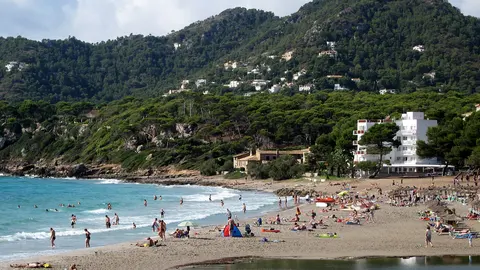
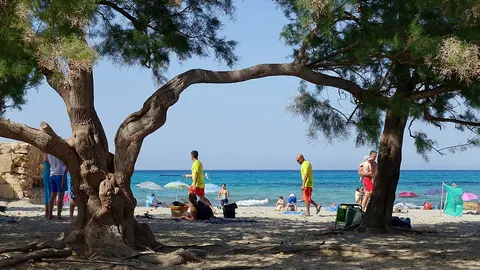
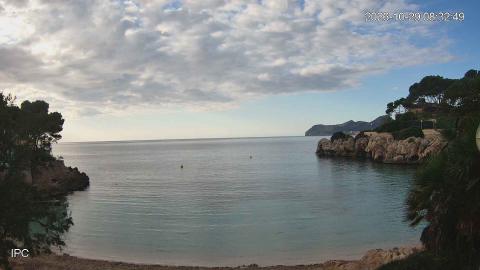
Cala Gat is a small cove below the road to the lighthouse, a short walk from the centre of Cala Ratjada. The camera looks down through pines and palms to a little crescent of sand, a bay of clear green water and the limestone rocks that enclose it, with the coastline on the horizon.
Because the cove is so sheltered, it is often calm when the open beaches are rough: this is the camera to check if you want a quiet swim. A date and time stamp in the corner shows when the image was taken.
Cala Ratjada harbour
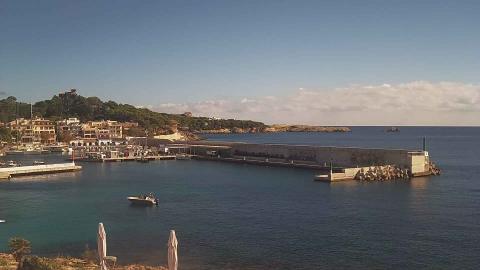
This camera looks across the harbour of Cala Ratjada to its long breakwater, with the green light at the entrance on the right. Fishing boats and pleasure craft are tied up along the quays, the town's waterfront lines the far side and a wooded hill with a tower rises behind.
It is the camera for the life of the port: the excursion boats leaving for the coast, the fishing boats coming in and the state of the sea outside the harbour wall. Sunrise lights the town across the water.
Cala Ratjada seafront promenade
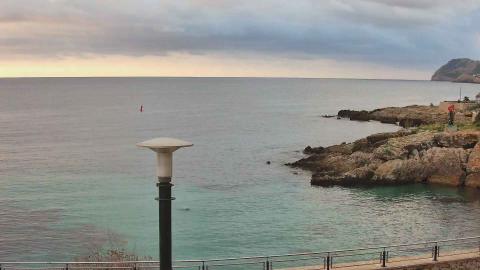
From the seafront promenade of Cala Ratjada, this camera looks out over a rocky shore to the open sea. A lamp post and the railing of the walkway are in the foreground, people stroll past, and below lie golden limestone rocks and water so clear that the sandy bottom shows turquoise. A rocky headland rises on the far right.
It is the camera that best shows the clarity of the water on this coast, and on a still morning it looks almost tropical. On rough days the waves break white over the rocks.
Beaches with different moods
Each beach faces a different way, and that is what makes the cameras useful. Son Moll, right in town, is short, sheltered and lively, about 140 m (460 ft) of sand. Cala Agulla, about 520 m (1,700 ft) long, is backed by pine woods and dunes inside a protected natural area. Cala Mesquida, open to the north, catches every swell and is the first to show white water when the wind turns northerly. On a breezy day one beach can be calm while another is rough, and the cameras tell you which before you set out.
When to watch Cala Ratjada
Mallorca is one hour ahead of the UK. This is the eastern edge of the island, so it sees the sunrise first; early morning is magical over the harbour and Son Moll. The sea is warmest, about 26 °C, in August, and coolest, around 14 °C, in late winter.
Around Cala Ratjada
The lighthouse at Cap de Capdepera marks the easternmost point of Majorca; on clear days Menorca shows on the horizon. Capdepera, about 2 miles (3 km) inland, is crowned by a medieval castle with wide views. Canyamel and its caves lie to the south.
Visiting Cala Ratjada
Palma airport is about 50 miles (80 km) away, a little over an hour by road. In summer, boats link the harbour with other resorts along the east coast. Lifeguards cover the main beaches in season; Cala Mesquida and Cala Agulla can have strong currents when waves are running, so watch the flags.