What you can see on the Ebro Delta webcams
The live camera looks across a freshwater lagoon in a bird reserve, framed by tall reeds on the far bank and in the foreground. Ducks dabble and preen close to the lens, and the sound of the marsh comes through with the picture; at night it switches to infrared. The second camera is a still photo from high above the river at Amposta, the delta's main town, looking across the broad, slow Ebro to the suspension bridge and the flat farmland beyond, with the latest temperature and humidity. A third camera, also a still photo, looks over the whole delta from the hills above L'Ampolla, across the coast road to the flat land and the bay of El Fangar.
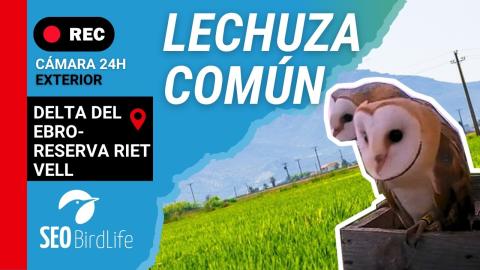
Waterbirds on the Riet Vell lagoon, live with sound
SEO/BirdLife streams this camera, with sound, from beside the lagoon of its Riet Vell reserve, south of the river in the Ebro Delta. It looks across open water at a wall of tall reeds on the far bank, with more reed heads swaying in the foreground and a tamarisk bush on the left. Ducks swim, feed and preen across the middle of the picture, close enough to tell one kind from another.
The lagoon is fresh water on an old bed of the Ebro, restored from rice paddies. Herons, swamphens, glossy ibises and flamingos are among the birds recorded on it. Early morning and the last light of the day are the busiest times; at night the camera switches to infrared.
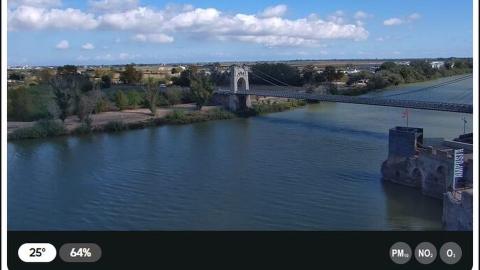
The Ebro at Amposta and its suspension bridge
This 3Cat weather camera looks out from high above the river at Amposta, the delta's main town. The wide, slow Ebro fills the lower half of the picture; on the right, a crenellated stone pier on the town bank anchors the suspension bridge, whose deck runs across to a tall white tower on the far side. Beyond, trees, reeds and sandbanks line the opposite bank, and the flat delta farmland stretches away to the horizon.
It shows the colour and level of the river and the sky over the delta. It is a still photo rather than video, with the temperature and humidity at the camera, and in the afternoon the sun is behind it, casting the town's shadow onto the water.
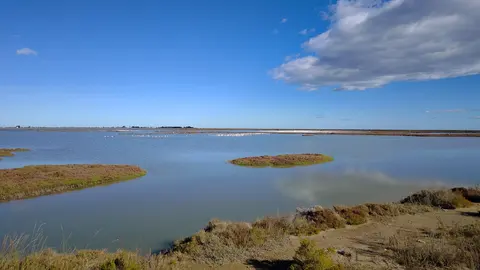
The delta and El Fangar bay from above L'Ampolla
This 3Cat weather camera stands on high ground above L'Ampolla, the fishing village on the northern edge of the delta, and looks south-east over the whole landscape. In the foreground lie pine woods and olive groves, crossed by the main coast road with its lorries; beyond them the flat delta stretches out to the sea, with the sheltered bay of El Fangar and its long sandy spit on the right.
It faces the morning sun, so early in the day the sky is bright and the water glitters; from late morning the colours return. It is a still photo with the temperature and humidity, good for seeing whether the delta is clear or under haze.
Rice, flamingos and a reserve run by birders
About 320 km² (124 sq mi) of land has built up at the river mouth from silt carried down the Ebro. A large part of it has been a natural park since 1983 and a wetland of international importance since 1993. Most of the rest is rice: the fields are flooded in spring, glow green through the summer and are harvested in September and October. Greater flamingos feed in the shallow lagoons all year. At Riet Vell, where the live camera stands, the conservation charity SEO/BirdLife set up a reserve beside an organic rice farm and turned old paddies back into lagoon and reed bed.
When to watch the Ebro Delta
The delta is one hour ahead of the UK and Ireland. Early morning and the last hour before sunset are the busiest times for birds, and the soft light on the reeds is best then. Spring and autumn bring migrants passing through, and in winter large flocks of ducks and waders spend the season on the lagoons.
Around the Ebro Delta
Amposta's suspension bridge, built between 1915 and 1921 with a main span of 134 metres (440 ft), is still in use. Out on the coast, the narrow Trabucador sandbar separates the open sea from the Alfacs bay, and Deltebre and Riumar are the bases for river trips to the mouth.
Visiting the Ebro Delta
The delta is about 2 hours by road south-west of Barcelona, and Reus airport is about an hour away. Riet Vell lies off the road from Amposta towards Eucaliptus, with a car park, a footpath and an observatory over the lagoon. Bring binoculars, and insect repellent in summer.